
Liquid Culture vs Grain Spawn: Which Should Home Mushroom Growers Use?
Liquid culture vs grain spawn is the first real decision every home mushroom grower faces, and most guides make it sound like a rivalry. It isn’t. They’re two different stages of the same pipeline. Liquid culture is how you carry living mycelium; grain spawn is how you multiply it into something strong enough to take over a bulk substrate. Once you see where each one fits, choosing gets easy.
The mushroom pipeline in one paragraph
Gourmet mushroom growing runs in stages: a clean culture is expanded onto sterilized grain, the colonized grain is mixed into a bulk substrate, and that substrate eventually fruits. Each stage gives the mycelium more food and more territory. Your choice of starting point simply decides how many of those stages you do yourself.
What is liquid culture?
Liquid culture (LC) is live mycelium suspended in a sterile, sugary broth, usually sold in a syringe. You inject a few millilitres through the self-healing port of a sterilized grain bag or jar, and the mycelium starts eating the grain. Compared with spore syringes, LC skips the slow, uncertain germination phase, so colonization is usually faster and more predictable. North Spore, for example, recommends liquid culture as the more efficient choice for most home growers (North Spore growing guides).
- Best for: growers who want to make their own grain spawn and control timing.
- Strengths: small, light, easy to store for weeks in the fridge, and one syringe can inoculate several bags.
- Watch out for: any contamination in the syringe spreads to every bag it touches, so buy from a source you trust and work clean.
What is grain spawn?
Grain spawn is sterilized grain, often rye, millet or sorghum, that has already been fully colonized by mycelium. It’s the mushroom equivalent of a seedling ready to transplant. You break it up and mix it into a bulk substrate such as a manure-based or hardwood-based mix, and the mycelium races outwards from every grain.
- Best for: beginners who want to skip sterile lab work, and anyone who needs a lot of substrate colonized fast.
- Strengths: hundreds of inoculation points in every handful, so it outcompetes contaminants quickly.
- Watch out for: it’s alive and hungry. Use it within a few weeks, and keep it cool until then.
Liquid culture vs grain spawn: side by side
- Stage: LC starts the grain stage; grain spawn starts the bulk stage.
- Skill needed: LC needs clean technique (alcohol, a still air box or a clean room); grain spawn mostly needs clean hands and a clean surface.
- Speed to harvest: grain spawn wins by a couple of weeks because the grain stage is already done.
- Cost per harvest: LC wins over time, because one syringe can seed several bags of grain.
- Flexibility: LC stores longer and lets you start grain bags whenever you’re ready.
A practical workflow that uses both
- Inject liquid culture into a sterilized grain bag with an injection port, then keep it in a dark spot around 70-75°F for most gourmet species.
- Wait for full colonization. Once the grain is mostly white, give the bag a gentle shake to break it up and speed things along.
- Mix the colonized grain into your bulk substrate. A spawn rate of roughly 10-20% by volume is a solid starting point; more spawn colonizes faster.
- Let the bulk colonize, then introduce fresh air, humidity and indirect light to trigger fruiting.
If you’d rather skip the grain stage on your first run, start with ready-made grain spawn and a pre-sterilized substrate. You’ll learn the fruiting side first, which is the fun part, and pick up sterile technique later.
Which should you start with?
Choose grain spawn if this is your first grow, if you want mushrooms as soon as possible, or if you don’t have a clean place to inoculate. Choose liquid culture if you’ve done one or two grows, want to grow more for less, or like experimenting with different species on your own schedule.
Gourmet species worth trying
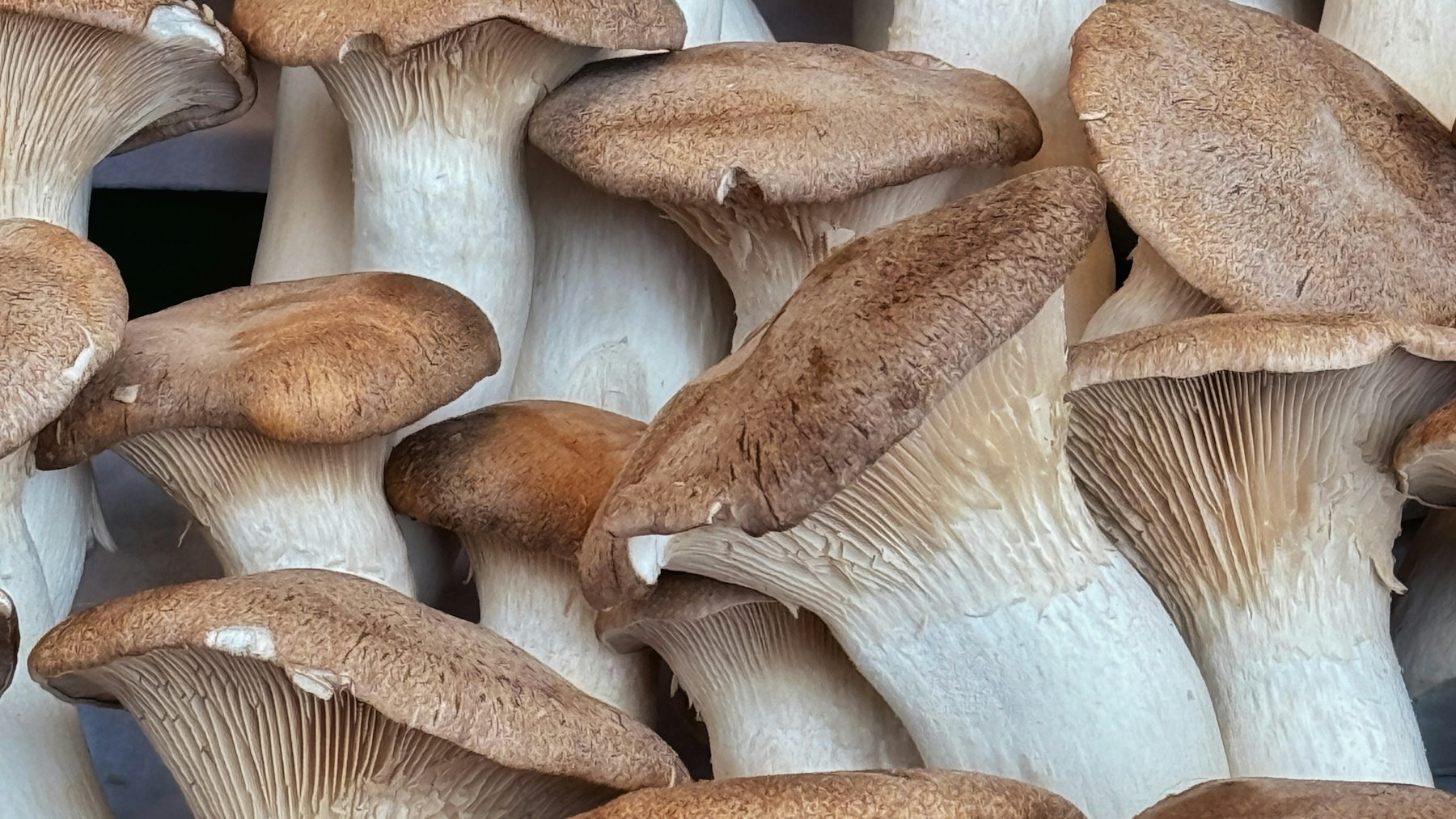
For your first liquid culture, fast and forgiving species make life easier. Our King Oyster liquid culture and Golden Enoki liquid culture are good places to start, and Tiger Sawgill grain spawn is a great way to try the grain-spawn route. Pair them with an OPTIMA sterilized grain bag and a sterile bulk substrate, or browse everything in grow supplies.